Create a sustainable future

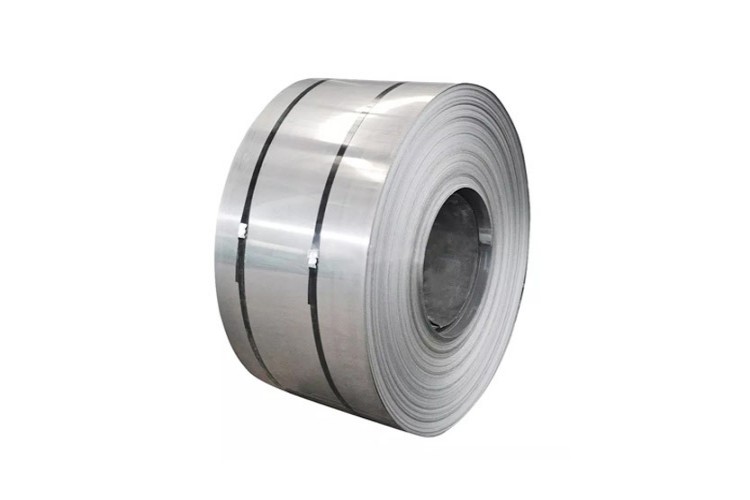
304 stainless steel coil is a low carbon, molybdenum bearing, austenitic stainless steel coil. Its chemistry features a minimum of 18% chromium and 8% nickel.
These grade stainless steel coils are used for its corrosion resistance to many chemical corrodents, in addition to having good mechanical properties. The corrosion resistance of grade 304 stainless steel makes it ideal for food processing equipment and surgical instruments. It has superior formability and weld ability when compared to other grades of stainless steel.
| Product Name | 304 stainless steel coil |
| Grades | 304/EN 1.4301/SUS304 |
| Hardness | Soft, Hard, Half Hard, Quarter Hard, Spring Hard as customer’s requirements |
| Thickness | 0.02mm-6.0mm |
| Width | 1.0mm-1500mm |
| Edge | Slit/Mill |
| Quantity Tolerance | ±10% |
| Paper Core Internal Diameter | Ø500mm paper core, special internal diameter core and without paper core on customer request |
| Surface Finish | /2B/2D/BA/HL/Brushed/6K/8K Mirror,etc |
| Packaging | Wooden Pallet/Wooden Case |
| Payment Terms | 30% TT deposit and 70% balance before shipment, LC at sight |
| Delivery Time | 5-7 working days |
| MOQ | 200Kgs |
| Shipping Port | Shanghai/Tianjin/Qingdao port |
| Sample | The sample of 304 stainless steel coil is available |
The chemical components of grade 304 stainless steel coil is summarized in the following table:
| Grade | Standard | C | Si | Mn | P | S | Cr | Ni | Mo |
| 304 | ASTM A240 | ≤0.07 | ≤0.75 | ≤2.00 | ≤0.045 | ≤0.030 | 18.00-20.00 | 8.00-11.00 | – |
| Grade | EN Grade | Yield Strength Rp0.2(N/mm²) | Tensile Strength Rm(N/mm²) | Hardness | Vickers Hardness(HV) | Elongation A50% |
| 304 | 1.4301 | ≥205 | ≥520 | Annealed | ≥150 | ≥40 |
304 stainless steel coil is a type of austenitic stainless steel with a minimum of 18% chromium, 8% nickel, and a maximum of 0.08% carbon.
It has excellent corrosion resistance in many environments, including fresh water, seawater, wastewater, acids and alkalies. It can be used for food processing and handling equipment such as tanks and heat exchangers.
These coils are made from annealed and pickled sheet, which gives them their ability to be shaped into any number of products. 304 stainless steel is an excellent choice for use in harsh environments where corrosion resistance is needed. This type of steel has a high resistance to rusting and oxidation, making it perfect for outdoor applications such as fencing or railings. It also has good resistance to pitting and crevice corrosion, which makes it a strong choice for marine environments.
304 stainless steel is often used in the medical industry because of its resistance to many different chemicals and its durability under high levels of heat. This makes it ideal for use in surgical instruments and other items that come into contact with human blood or bodily fluids. It can also be used in food processing equipment because it does not leach ions into food products as some other metals do.
304 stainless steel coils can be used in a wide range of applications, including:
1.Food and beverage processing
The food industry uses 304 stainless steel coils to manufacture equipment like water heaters, boilers and tanks.
2.Healthcare equipment
Hospitals use 304 stainless steel coils to make a variety of medical equipment, including surgical tables, bedpans and incubators for newborns.
3.Industrial machinery
Manufacturers of industrial machinery rely on 304 stainless steel coils for parts such as valves and pumps in their products.
4.Construction equipment
Building contractors use 304 stainless steel coils to make weatherproofing materials that protect buildings from rain and snow while they are under construction or renovation.
304 stainless steel coils features:
1. 304 stainless steel coils is high strength, good toughness and wear resistance, corrosion resistance and thermal conductivity;
2. 304 stainless steel coils has a high temperature resistance (up to 870 degrees);
3. 304 stainless steel coils has good anti-oxidation ability and can be used in many occasions;
4. 304 stainless steel coils is widely used in all kinds of industries such as food, chemical industry and metallurgy, etc;
5. The price of 304 stainless steel coils is not expensive than other grades, but the price will rise rapidly when the demand for it increases.
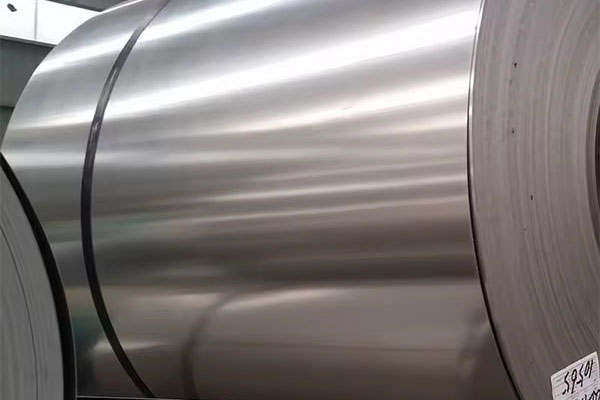
Through different processing methods of cold rolling and surface reprocessing after rolling, the surface finish of 304 stainless steel coils can have different types.
The surface processing of stainless steel coils have , 2B, No. 4, HL, No. 6, No. 8, BA, TR hard, Rerolled bright 2H, polishing bright and other surface finishes, etc.
: No. 1 surface refers to the surface obtained by heat treatment and pickling after hot rolling of the stainless steel strip. It is to remove the black oxide scale produced during hot rolling and heat treatment by pickling or similar treatment methods. This is No. 1 surface processing. The No.1 surface is silvery white and matt. Mainly used in heat-resistant and corrosion-resistant industries that do not require surface gloss, such as alcohol industry, chemical industry and large containers.
2B: The surface of 2B is different from the 2D surface in that it is smoothed with a smooth roller, so it is brighter than the 2D surface. The surface roughness Ra value measured by the instrument is 0.1~0.5μm, which is the most common processing type. This kind of stainless steel strip surface is the most versatile, suitable for general purposes, which is widely used in the chemical, paper, petroleum, medical and other industries, and can also be used as a building curtain wall.
TR Hard Finish: TR stainless steel is also called hard steel. Its representative steel grades are 304 and 301, they are used for products that require high strength and hardness, such as railway vehicles, conveyor belts, springs and gaskets. The principle is to use the work hardening characteristics of austenitic stainless steel to increase the strength and hardness of the steel plate by cold working methods such as rolling. The hard material uses a few percent to several tens of percent of the mild rolling to replace the mild flatness of the 2B base surface, and no annealing is carried out after rolling. Therefore, the TR hard surface of the hard material is the rolled after cold rolling surface.
Rerolled Bright 2H: After the rolling process. the stainless steel strips will be processed bright annealing. The strip can be fast cooled by the the continuous annealing line. The traveling speed of the stainless steel strip on the line is around 60m~80m/min. After this step, the surface finish will be 2H rerolled bright.
No.4: The surface of No. 4 is a fine polished surface finish that is brighter than the surface of No. 3. It is also obtained by polishing the stainless steel cold-rolled stainless steel plate with 2 D or 2 B surface as the base and polishing with abrasive belt with a grain size of 150-180# Machined surface. The surface roughness Ra value measured by the instrument is 0.2~1.5μm. NO.4 surface is widely used in restaurant and kitchen equipment, medical equipment, architectural decoration, containers, etc.
HL: HL surface is commonly called hairline finish. Japanese JIS standard stipulates that 150-240# abrasive belt is used to polish the continuous hairline-like abrasive surface obtained. In China’s GB3280 standard, the regulations are rather vague. HL surface finish is mostly used for building decoration such as elevators, escalators, and facades.
No.6: The surface of No. 6 is based on the surface of No. 4 and is further polished with a Tampico brush or abrasive material with a particle size of W63 specified by GB2477 standard. This surface has a good metallic luster and soft performance. The reflection is weak and does not reflect the image. Due to this good property, it is very suitable for making building curtain walls and building fringe decorations, and also widely used as kitchen utensils.
BA: BA is the surface obtained by bright heat treatment after cold rolling. Bright heat treatment is annealing under a protective atmosphere that guarantees that the surface is not oxidized to preserve the gloss of the cold-rolled surface, and then use a high-precision smoothing roll for light leveling to improve the surface brightness. This surface is close to a mirror finish, and the surface roughness Ra value measured by the instrument is 0.05-0.1μm. BA surface has a wide range of uses and can be used as kitchen utensils, household appliances, medical equipment, auto parts and decorations.
No.8: No.8 is a mirror-finished surface with the highest reflectivity without abrasive grains. The stainless steel deep processing industry also calls as 8K plates. Generally, BA materials are used as raw materials for mirror finishing only through grinding and polishing. After mirror finishing, the surface is artistic, so it is mostly used in building entrance decoration and interior decoration.
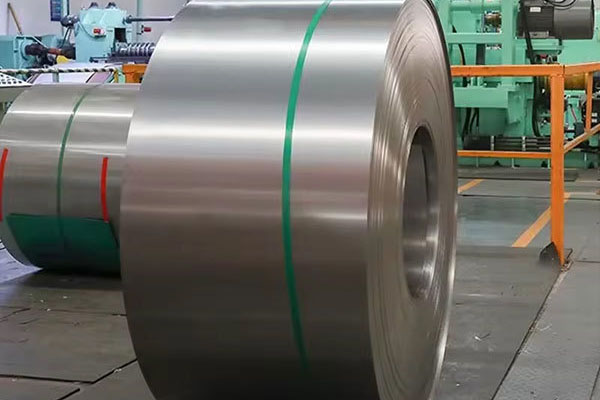
Mill edge is a non-trimmed edge appearance after hot or cold rolling and annealing/pickling process. It usually leaved an irregular pinhole line on the edge side around 10mm to 15mm.
Slit/slitting edge means we will trim irregular pinhole line on our slitting machine.